Friday, October 14, 2011

Sri Sridhar Rao

Hari Om,

In 1944 or 1945, Sri Kashiram Gupta, a Marwadi devotee of Swami Sivananda and father of Sri Ram Niwas Gupta, who was very close to Sri Gurudev, came to the Ashram on a visit. Swami Sivananda called him to his Ganga bank Kutir. When Sri Kashiram Gupta entered the Kutir, Gurudev told him to be seated and enquired whether he was well-accommodated and comfortable. After Sri Kashiramji, an elderly person, assured him that he was perfectly at home, Gurudev suddenly looked at him and told him: "O jee! My successor has already come!" Sri Guptaji was somewhat surprised and asked Swami Sivanandji who that successor was. At that time Sri Sridhar Rao (later Swami Chidananda) had gone to the river bank and taken his dip and was drying himself, with a towel around his waist. Swami Sivananda pointed a finger in the direction of Sridhar Rao and told Sri Gupta: "Look there! See that young man on the riverbank? That is my successor." So, it seemed that already Swami Sivananda had made up his mind about his successor. It was indeed Pujya Swamiji's sankalpa which inspired student Sridhar Rao on the spiritual path and later drew him irresistibly to Rishikesh, to the feet of the Master. Sridhar Rao was conferred Sannyas by Gurudev six years after he arrived in Sivananda Ashram, in 1948, on Guru Purnima day, and thus was born Swami Chidananda Maharaj.


Om Namoh Bhagavathe Sivanandaya !

Om Namoh Bhagavathe Chidanandaya !

Thursday, October 6, 2011

Spiritual Significance of Navaratri

Hari Om !


Swami Sivananda describes in detail the spiritual significance of Navaratri in his book Hindu Fasts and Festivals . Here is an excerpt from the chapter on Durga Puja or Navaratri.

The central purpose of existence is to recognise your eternal identity with the supreme Spirit. It is to grow into the image of the Divine. The supreme One embodies the highest perfection. It is spotless purity. To recognise your identity with That, to attain union with That, is verily to grow into the very likeness of the Divine. The aspirant, therefore, as his initial step, has to get rid of all the countless impurities, and the demoniacal elements that have come to cling to him in his embodied state. Then he has to acquire lofty virtues and auspicious, divine qualities. Thus purified, knowledge flashes upon him like the brilliant rays of the sun upon the crystal waters of a perfectly calm lake.

This process demands a resolute will, determined effort, and arduous struggle. In other words, strength and infinite power are the prime necessity. Thus it is the Divine Mother who has to operate through the aspirant.

Let us now consider how, on the first three days, the Mother is adored as supreme power and force, as Durga the Terrible. You pray to Mother Durga to destroy all your impurities, your vices, your defects. She is to fight with and annihilate the baser animal qualities in the spiritual aspirant, the lower, diabolical nature in him. Also, She is the power that protects your spiritual practice from its many dangers and pitfalls. Thus the first three days, which mark the first stage or the destruction of impurity and determined effort and struggle to root out the evil tendencies in your mind, are set apart for the worship of the destructive aspect of the Mother.

Once you have accomplished your task on the negative side, that of breaking down the impure propensities and old vicious habits, the next step is to build up a sublime spiritual personality, to acquire positive qualities in place of the eliminated demoniacal qualities. The divine qualities that Lord Krishna enumerates in the Gita, have to be acquired. The aspirant must cultivate and develop all the auspicious qualities. He has to earn immense spiritual wealth to enable him to pay the price for the rare gem of divine wisdom. If this development of the opposite qualities is not undertaken in right earnest, the old demoniacal nature will raise its head again and again. Hence, this stage is as important in an aspirant's career as the previous one. The essential difference is: the former is a ruthless, determined annihilation of the filthy egoistic lower self; the latter is an orderly, steady, calm and serene effort to develop purity. This pleasanter side of the aspirant's Sadhana is depicted by the worship of Mother Lakshmi. She bestows on Her devotees the inexhaustible divine wealth or Deivi Sampath. Lakshmi is the wealth-giving aspect of God. She is purity itself. Thus the worship of Goddess Lakshmi is performed during the second set of three days.

Once the aspirant succeeds in routing out the evil propensities, and develops Sattwic or pure, divine qualities, he becomes competent to attain wisdom. He is now ready to receive the light of supreme wisdom. He is fit to receive divine knowledge. At this stage comes the devout worship of Mother Saraswathi, who is divine knowledge personified, the embodiment of knowledge of the Absolute. The sound of Her celestial veena awakens the notes of the sublime utterances of the Upanishads which reveal the Truth, and the sacred monosyllable, Om. She bestows the knowledge of the supreme, mystic sound and then gives full knowledge of the Self as represented by Her pure, dazzling snow-white apparel. Therefore, to propitiate Saraswathi, the giver of knowledge, is the third stage.

The tenth day, Vijaya Dasami, marks the triumphant ovation of the soul at having attained liberation while living in this world, through the descent of knowledge by the Grace of Goddess Saraswathi. The soul rests in his own Supreme Self or Satchidananda Brahman. This day celebrates the victory, the achievement of the goal. The banner of victory flies aloft. Lo! I am He! I am He!

This arrangement also has a special significance in the aspirant's spiritual evolution. It marks the indispensable stages of evolution through which everyone has to pass. One naturally leads to the other; to short-circuit this would inevitably result in a miserable failure. Nowadays many ignorant seekers aim straight at the cultivation of knowledge without the preliminaries of purification and acquisition of the divine qualities. They then complain that they are not progressing on the path. How can they? Knowledge will not descend until the impurities have been washed out, and purity is developed. How can the pure plant grow in impure soil?

Therefore adhere to this arrangement; your efforts will be crowned with sure success. This is your path. As you destroy one evil quality, develop the virtue opposite to it. By this process you will soon bring yourself up to that perfection which will culminate in identity with the Self which is your goal. Then all knowledge will be yours: you will be omniscient, omnipotent and you will feel your omnipresence. You will see your Self in all. You will have achieved eternal victory over the wheel of births and deaths, over the demon of worldliness. No more pain, no more misery, no more birth, no more death! Victory, victory be yours!

Glory to the Divine Mother! Let Her take you, step by step to the top of the spiritual ladder and unite you with the Lord!

Om Namoh Bhagavathe Sivanandaya !

Om Namoh Bhagavathe Chidanandaya !


Friday, September 2, 2011

Story of a Bania

Hari Om,
A Bania once approached a Sadhu for initiation. The Sadhu said: “I will initiate you when I meet you next time.” The Bania pressed the Sadhu again and again on several days for quick initiation. The Sadhu totally declined. He returned to the Bania after a couple of years. He placed in his Bhiksha-bowl some mud, hair, urine and excreta and approached the Bania for alms. The Bania brought nice sweet-meats, Kheer, Halwa, etc., for the Sadhu. He prepared nice dishes as he thought he would be initiated this time by the Sadhu. The Sadhu said to the Bania: “Put everything in my bowl.”

The Bania said: “How can I place them, Swamiji, in this dirty bowl. Kindly clean the bowl and bring it to me. I will place all the preparations in it.”
 
The Sadhu replied: “When such is the case with this bowl how can I place the pure Lord in your heart which is filled with various impurities like lust, anger, pride, greed, etc. How can I initiate you now, when your mind is very dirty like this bowl?”
 
The Bania got vexed and went away in shame. He purified himself through charity and selfless service and got himself initiated by the same Sadhu after some time. The ground (mind) must be prepared first. Why do you bother much about Upadesha? Purify yourself, and get the moral qualifications, Brahmacharya, etc. The initiation will come by itself.

Source : Swami Sivananda's Practice of Karma Yoga

Om Namoh Bhagavathe Sivanandaya !

Om Namoh Bhagavathe Chidanandaya !


Tuesday, August 9, 2011

Swami Sivananda's Personality

Hari Om,

Here is an excerpt from Dr.Devaki Kutty Mataji's lecture on  Swami Sivananda's personality :

" I will tell you another instance which shows what a wonderful person He was. I had come on holiday from my college. An elderly blind man had arrived. I do not know whether he was really blind, but he sang beautifully. And any good quality meant that Gurudev would take him in. So there he was, singing every night at the Satsang. He sang beautiful Bhajans. Then after four or five days he told Gurudev: “Swamiji, this harmonium is not very good, I would like to have a better harmonium.” And this man had come to the Ashram only four or five days earlier. In those days Rishikesh was a small town, and nothing was available here. So Gurudev asked him: “Where do we get good harmoniums?” And the man said: “In Lucknow.” And you know, Lucknow is far from here. Swamiji called a man and said: “Oh jee, go to Lucknow tomorrow and get him a harmonium according to his specifications.” So this fellow went and within three or four days he came with a beautiful harmonium. And for four days we had beautiful music on that harmonium. On the fifth day the man disappeared from the Ashram with the harmonium. At the Satsang somebody went to Gurudev and said: “Gurudev, that man, you were so good to him, that man has taken the new harmonium and has gone!” Gurudev smiled and said: “But there is one thing. How will he sing without the tabla? He should have taken the tabla also and not only the harmonium.” Look at this! Many of us were furious, my blood was boiling. I thought: “Look at this stupid man! How good was Gurudev to him. And he took the harmonium and went away.” But nothing worried Gurudev. And look at His attitude. He should have taken the tabla also, not only the harmonium. He could have made a living by it. This is the attitude towards life we have to develop. It is far beyond us, but we have to develop it."

Om Namoh Bhagavathe Sivanandaya !

Om Namoh Bhagavathe Chidanandaya !


Tuesday, July 19, 2011

Sannyasa-a Mental State

Hari Om,


Sannyasa is a mental state only. It is Gerua or colouring of the heart and not of cloth alone. He is a veritable Sannyasin who is free from passions and egoism and who possesses all the Sattvic qualities, even though he lives with the family in the world. Chudala was a queen-Yogini-Sannyasini, though she was ruling a kingdom. That Sannyasin who lives in the forest, but who is full of passions is worse than a householder and a worldly-minded fool. Sikhidhvaja was a worldly man, though he lived in the forest naked for very many years.

True renunciation is the renunciation of all passions, desires, egoism and Vasana. If you have a stainless mind, a mind free from attachment, egoism and passion, you are a Sannyasin-no matter whether you live in a forest or in the bustle of a city, whether you wear white cloth or an orange-coloured robe, whether you shave the head or keep a long tuft of hair.

Shave the mind. Someone asked Guru Nanak, "O saint, why have you not shaved your head? You are a Sannyasin." Guru Nanak replied, "My dear friend, I have shaved my mind." In fact, the mind should be cleanly shaved. Shaving the mind consists in getting rid of all sorts of attachments, passions, egoism, Moha (infatuation), lust, greed, anger, etc. This is the real shaving. External shaving of the head has no meaning so long as there is internal craving, Trishna.

Many have not understood what true renunciation is. Renunciation of physical objects is no renunciation at all. The real Tyaga (renunciation) consists in the renunciation of egoism (Ahankara). If you can renounce this Ahankara, you have renounced everything else in the world. If the subtle Ahankara is given up, Dehadhyasa (identification with the body) automatically goes away.

Vedanta does not want you to renounce the world. It wants you to change your mental attitude and give up this false, illusory 'I'-ness (Ahamta) and mineness (Mamata). The snake-charmer removes only the two poisonous fangs of the cobra. The snake remains the same. It hisses, raises its hood and shows the teeth. In fact, it does everything as before. The snake-charmer has changed his mental attitude towards the snake. He has a feeling now that it has got no poisonous fangs. Even so, you must remove the two poisonous fangs of the mind, viz., Ahamta and Mamata only. Then you can allow the mind to go wherever it likes. Then you will have always Samadhi only.

You must renounce the Tyagabhimana also. The Tyagabhimana is very deep-rooted. You must renounce the idea, "I have renounced everything." "I am a great Tyagi"-this Abhimana of the Sadhus is a greater evil than the Abhimana of householders, "I am a landlord; I am a Brahmin, etc." 

Source : Swami Sivananda's Mind -Its Mysteries and Control 

Om Namoh Bhagavathe Sivanandaya !

Om Namoh Bhagavathe Chidanandaya !
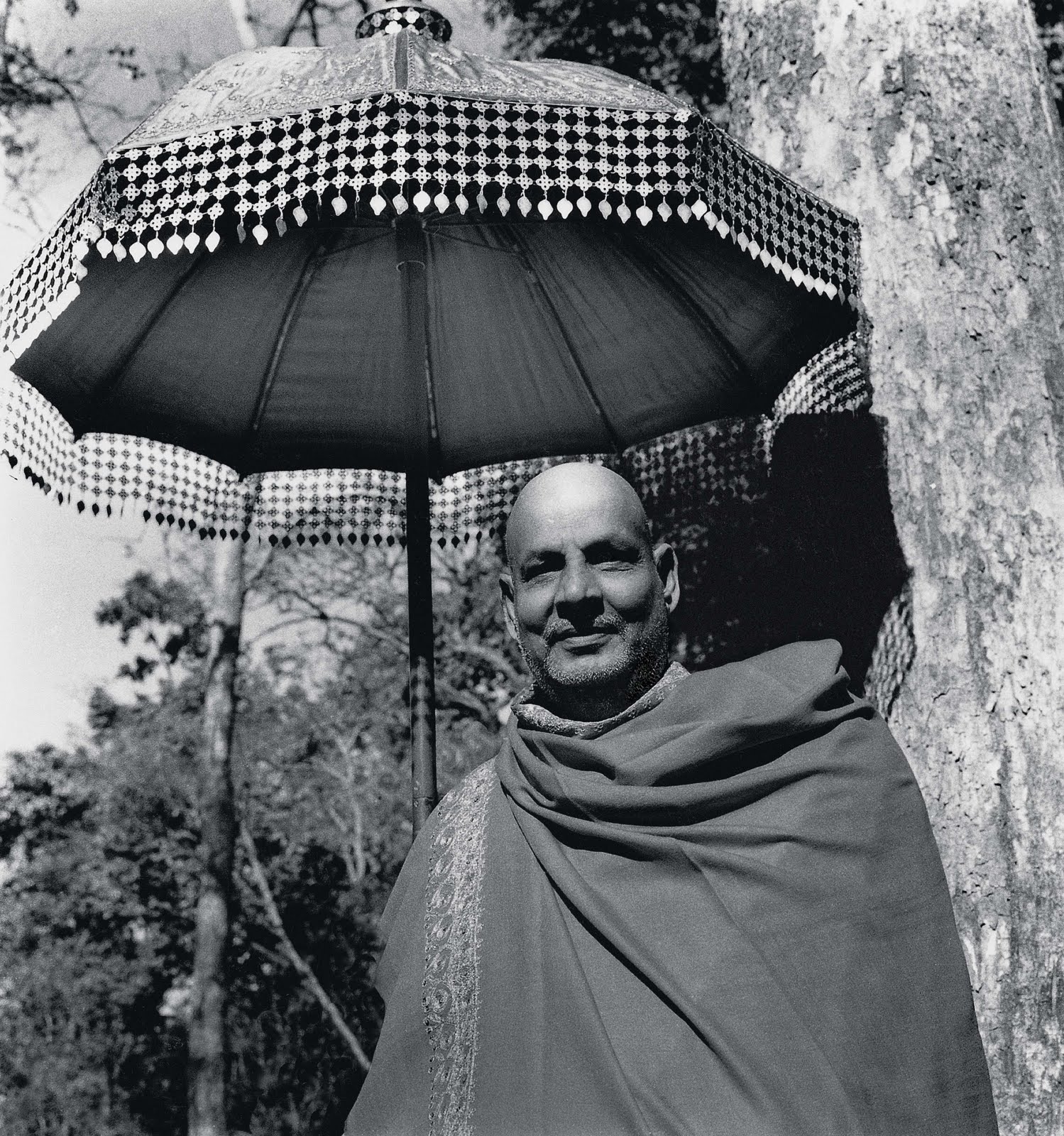
Thursday, July 14, 2011

Life is a Dream


Hari Om,

I have heard many a times from the words of sages, saints and philosophers that ‘Life is a Dream’. I have never been able to comprehend how it could be, until yesterday when I read Swami Sivananda’s 'Philosophy of Dreams'. I am not sure if I have understood it completely, but some insights did dawn in me, and I like to share it on this blog. Well, when we are awake, the dreams we see in our sleep seems so ‘unreal’. When we are dreaming, the state when we are awake seems so ‘unreal’. The mind is a common factor which functions during our wakeful and dreaming states; the only difference is the mind functions along with the senses in our wakeful state and the mind alone functions (without senses) during our dreaming. Both the states are ‘unreal’ relatively. Probably, this is the reason why life which we perceive as ‘real’ during our wakeful state is nothing but a long dream. Even, in the wakeful state, what has passed in our life is a ‘dream’ or the future which we perceive in our minds in also a ‘dream’. What seems real is only the present moment. The present moment seems real since it is limited by a time factor. Once time advances, this ‘present’ also becomes a ‘past’ and becomes a ‘dream’. Remove the time factor, the present is also a dream. Life thus in totality is nothing but a long dream.

Om Namoh Bhagavathe Sivanandaya !

Om Namoh Bhagavathe Chidanandaya !

Wednesday, July 13, 2011

Parable of The Boy and The Angel

Hari Om,

There was a very hard-working student who used to study till late in the night. He was very poor. He had to exert much for getting books and oil for his midnight studies. One day, being much tired, he fell asleep at night, while he was at his studies. He saw in his dream a strange vision. A celestial being appeared to him and said: "O boy, open your mouth and I shall put into it a pill of all the knowledge of the universe. Thus be relieved of all your troubles, and rest in peace." But the boy said: "I want not all the knowledge of the universe to be spat into my mouth. Be gracious enough to provide me with oil for my studies." Thus, the vision ended and the boy, by his self-exertion, became one of the greatest men of the age. 

A Sadhaka, too, must have the same spirit of self-exertion. Then alone will he evolve quickly and attain to the peak of knowledge. A mother can give food to the son, but she cannot herself digest it for him. He has to digest it himself. A Guru or guide can show one the right path, but one has to tread it oneself. 

Expect not to acquire knowledge without any exertion on your part, for verily such knowledge is mere dream. Right exertion alone can enable you to draw grace from Guru or God. One who flies away from difficulties can never be relieved of them. But one who faces them boldly will afterwards be able to cross them and will attain supreme Peace and Bliss even in this very life. 

Source : Swami Sivananda - Parables of Sivananda 

Om Namoh Bhagavathe Sivanandaya !
Om Namoh Bhagavathe Chidanandaya !